
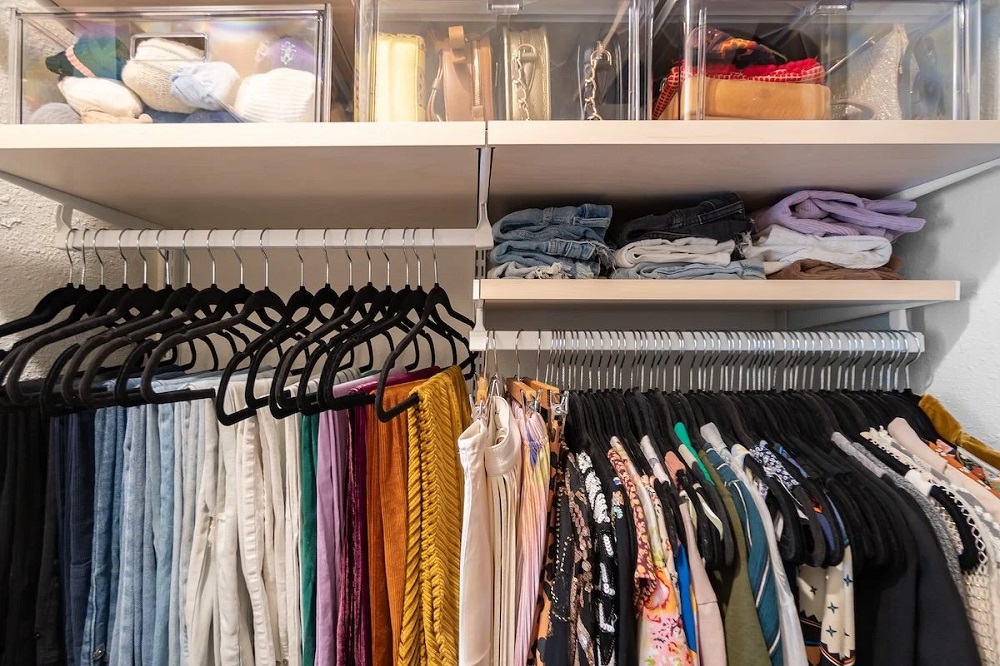
Living in an apartment, a tiny home, or a historic house often means dealing with limited closet space. When square footage is at a premium, a standard wardrobe setup can quickly devolve into visual clutter and physical frustration. The challenge of a small space is not necessarily the lack of room, but rather the lack of strategy.
Organizing clothing in a compact environment requires looking past traditional storage assumptions. By treating spatial design as a game of optimization, you can transform the smallest closet or bedroom corner into a highly efficient, streamlined dressing area. This guide breaks down practical, simple clothing organization methods tailored specifically for tight spaces.
The Foundation of Spatial Decluttering
Before purchasing storage bins or shifting hangers, you must establish an accurate baseline of what you actually wear. In a large closet, underutilized clothing causes minor inefficiency. In a small space, it completely breaks the system.
The Reverse Hanger Audit
A highly reliable way to track clothing usage without relying on memory is the reverse hanger test.
- The Setup: At the beginning of the organizing process, hang all your clothes with the hanger hooks facing backward, pointing toward you instead of toward the back of the closet rod.
- The Execution: Every time you wear an item and return it to the closet, place the hanger back in the correct, standard direction.
- The Evaluation: After three to six months, look at the hangers that remain backward. This visual data provides objective proof of what you do not wear, giving you a clear list of items to donate, sell, or place in long-term storage.
The One In One Out Rule
To maintain equilibrium in a small space, adopt a strict boundary policy for new purchases. If you bring a new sweater or pair of shoes into your bedroom, an existing item in that same category must exit. This practice enforces intentional consumer habits and prevents inventory creep from overwhelming your physical boundaries.
Maximize Vertical and Architectural Boundaries
When floor space is limited, the only direction to expand is upward. Most standard closets leave massive amounts of empty space near the ceiling and floor.
Utilizing High-Altitude Shelving
The space above your main closet rod is prime real estate for items you do not need on a daily basis.
- Off-Season Rotation: Use uniform, clear plastic containers to store out-of-season apparel, such as heavy winter knitwear during the summer months. Clear containers allow you to identify contents instantly without pulling the boxes down.
- Uniform Labeling: Even with clear bins, placing a bold text label on the front facing the room saves time and prevents you from disturbing the organization of stacked boxes.
Double the Rod Capacity
A single clothing rod leaves the bottom half of a closet completely empty. Installing a secondary, hanging tension rod beneath your shorter garments immediately doubles your hanging capacity. Use the top rod for shirts, blouses, and light jackets, while utilizing the lower rod for folded trousers, skirts, and shorts.
The Mechanics of Efficient Folding
Traditional flat folding stacks clothes on top of each other, creating a vertical pile that hides everything except the top item. When you pull a shirt from the bottom, the entire stack collapses, creating mess and frustration.
The Vertical Filing Method
Popularized by modern organization experts, file folding shifts your clothing layout from a vertical stack to a horizontal row.
- The Technique: Fold shirts, jeans, and activewear into compact, self-sustaining rectangles that can stand upright on their edge.
- The Drawer Layout: Arrange these rectangles front-to-back inside your dresser drawers, much like folders in a filing cabinet.
- The Advantage: This method allows you to see every single garment the moment you open the drawer. It eliminates the need to dig through piles, keeps garments wrinkle-free, and maximizes the internal volume of the drawer.
Drawer Dividers and Honeycomb Inserts
Small items like socks, undergarments, and belts easily get lost in deep drawers. Use adjustable tension dividers or fabric honeycomb inserts to create dedicated cells for these smaller items. Giving each accessory a specific boundary prevents clutter from spreading across the drawer space.
Repurposing Alternative Storage Zones
When your primary closet is full, you must look for hidden storage opportunities embedded within the architecture of your room.
Under-Bed Storage Optimization
The void beneath your bedframe is one of the most underutilized areas in small-scale living.
- Low-Profile Rolling Bins: Invest in shallow, long rolling storage bins equipped with wheels. These containers slide out effortlessly, making them perfect for footwear, extra linens, or heavy denim.
- Dust Protection: Ensure the containers feature secure, locking lids to shield your textiles from dust bunnies and pet hair that naturally accumulate along bedroom floors.
Over-the-Door Solutions
The back of your bedroom or closet door offers a valuable vertical canvas. Avoid flimsy plastic pockets that sag over time. Instead, opt for heavy-duty metal over-the-door hooks or industrial grid systems. These setups are excellent for organizing bags, hats, heavy coats, or daily footwear combinations without taking up any closet rod space.
Slim Profile Hardware Selection
The physical tools you use to hang your clothing directly impact how much physical volume your wardrobe occupies.
Uniform Velvet Hangers
Traditional wooden and thick plastic hangers are highly inefficient, hogging valuable horizontal inches along your closet rod. Swapping them out for ultra-slim velvet hangers provides immediate spatial relief.
- Friction Grips: The velvet texture prevents slippery silk blouses and wide-neck tops from sliding off onto the floor.
- Space Reclamation: Because velvet hangers are exceptionally thin, they can compress your hanging wardrobe closely together, often freeing up to thirty percent of your existing rod space.
Cascading Hanger Hooks
For items that naturally group together, such as button-down work shirts or matching suits, use cascading connector hooks. These small tabs slide over the neck of a hanger, allowing you to hook a second and third hanger directly below the first one. This shifts the storage burden from a horizontal layout to a vertical cascade.
Frequently Asked Questions
How do I store bulky winter coats when I do not have a coat closet?
Bulky winter jackets should be compressed using vacuum-seal storage bags during the warmer months. Once the air is extracted, these massive garments flatten into slim plastic sheets that can easily slide under a bed, stack flat on a high shelf, or fit behind a sofa. When winter returns, simply open the bag, and the down or synthetic insulation will loft back up to its original shape.
Is it better to hang or fold knitwear and sweaters in a compact bedroom?
Sweaters and knitwear should always be folded rather than hung on standard hangers. The weight of the knit fabric causes gravity to pull the garment downward, permanently stretching out the shoulders and neckline, creating unsightly bumps. If you must hang them due to a total lack of drawer space, utilize a specialized fold-over technique where the sweater is draped over the horizontal bar of a hanger like trousers.
How can I keep my shoes organized if I do not have room for a traditional shoe rack?
When floor space cannot accommodate a shoe rack, transition to vertical or modular options. Tension rod grids can be placed along the bottom wall of a closet to hold heels and flats. Alternatively, utilize a slim, vertical hanging organizer that attaches directly to your closet rod, or place clear, stackable shoe boxes along the top perimeter shelf of your room.
What is the best way to handle clothes that have been worn once but are not dirty enough for the laundry?
In small spaces, these in-between clothes often end up piled on a chair or the floor. To prevent this, dedicate a specific, small zone for semi-worn items. This could be a stylish woven basket in the corner, a set of decorative peg hooks on the wall behind the door, or a designated section at the far end of your closet rod. Keeping them separate prevents contamination of fresh laundry while keeping the floor clear.
How do I prevent my small closet from developing a musty odor?
Limited air circulation causes small, packed closets to trap moisture and odors. To combat this, ensure your clothing is completely dry before putting it away. Place solid cedar blocks, lavender sachets, or activated charcoal bags on your shelves to naturally absorb ambient moisture and neutralize odors without relying on heavy, synthetic chemical perfumes.
Can open wardrobe racks work well in a small bedroom?
Freestanding open clothing racks can be highly successful if you maintain strict visual discipline. Because your clothing is fully visible to the room, an unorganized rack will instantly make the entire bedroom appear messy. To make it work, use matching hangers, organize the garments by color, and use the bottom shelf of the rack for structured baskets to hide shoes and small accessories from direct sight.